Think you’ve mastered anesthesia? Let’s find out
January 15, 2026 · COMMUNITY

Anesthesia can be one of the most intimidating aspects of veterinary medicine. Whether you're monitoring a 2-pound kitten or a 150-pound Great Dane, the stakes are high—and the pressure is real.
That’s why we’re offering a hands-on training at the PetOne Veterinary Training Center, led by Dr. Gaby Escalante (DVM, DACVAA), a board-certified veterinary anesthesiologist who's dedicated her career to demystifying anesthesia and empowering veterinary teams.
This course is designed for both veterinary clinicians and nurses who want to build competence and confidence in providing safe, effective anesthetic care.
But first, let's see where your anesthesia knowledge stands. Take this quiz to discover what you already know—and what you might learn at the PetOne Veterinary Training Center!
Answers
1. A 12-year-old Labrador with a heart murmur needs a dental procedure. Your first priority in anesthetic planning should be:
Answer: b) Perform pre-anesthetic bloodwork and consider cardiac evaluation
Explanation: Geriatric patients with cardiac disease require thorough pre-anesthetic assessment. Understanding the severity of the heart condition helps you tailor your anesthetic protocol, choose appropriate drugs, and prepare for potential complications. "Light anesthesia" isn't safer if it means inadequate analgesia or unstable anesthetic planes.
Tip: Every geriatric or compromised patient deserves an individualized anesthetic plan—there's no one-size-fits-all approach.
2. During anesthesia monitoring, you notice the obstructive waveform, also known as a “shark fin,” has suddenly flatlined while the patient still has a heartbeat from the pulse oximeter. The most likely cause is:
Answer: b) The endotracheal tube is kinked or disconnected
Explanation: A flatline capnography reading with a present heartbeat typically indicates a mechanical problem with CO₂ detection—kinked tube, disconnection, or blocked airway. This is a critical moment requiring immediate troubleshooting. If the patient had arrested, you wouldn't see organized cardiac activity.
Tip: When monitoring parameters don't make sense together, always check your equipment and connections first before assuming the worst.
3. True or False: Brachycephalic patients should be extubated as soon as possible after surgery to reduce anesthetic time.
Answer: False
Explanation: Brachycephalic patients are at high risk for airway obstruction and should remain intubated until they have strong swallow reflexes and can maintain their own airway. Early extubation can lead to life-threatening airway emergencies. These patients need extended monitoring during recovery.
Tip: With brachy breeds, patience during recovery is just as important as careful anesthetic management.
4. A patient's blood pressure reads 60 mmHg systolic during anesthesia. Your immediate response should be:
Answer: b) Decrease the anesthetic gas immediately and consider appropriate hemodynamic support such as fluid bolus, vasopressor or contractility agents, or anticholinergics.
Explanation: Hypotension (systolic BP <80-90 mmHg) during anesthesia compromises organ perfusion and requires immediate intervention. It’s important to emphasize hemodynamic eqns that help teams know what agents to use to support hypotensive events: MAP= CO x SVR. CO= HR x SV. Decreasing anesthetic depth, administering fluids, and considering vasopressor support are all appropriate responses. Waiting or ignoring it can lead to organ damage.
Tip: Blood pressure matters. Hypotension isn't just a number—it's inadequate tissue perfusion that can cause lasting damage.
5. Which statement about pain assessment is most accurate?
Answer: c) Pain assessment should be performed using validated scales and requires careful observation of behavior
Explanation: Pain assessment is a skill that requires training and attention. Animals mask pain as a survival instinct, and different species show pain differently. Validated scales like the Glasgow Composite Pain Scale provide objective frameworks for assessment. Never assume a quiet patient is a comfortable patient.
Whether you aced the quiz or discovered areas to strengthen, this course with Dr. Gaby will elevate your skills and confidence.
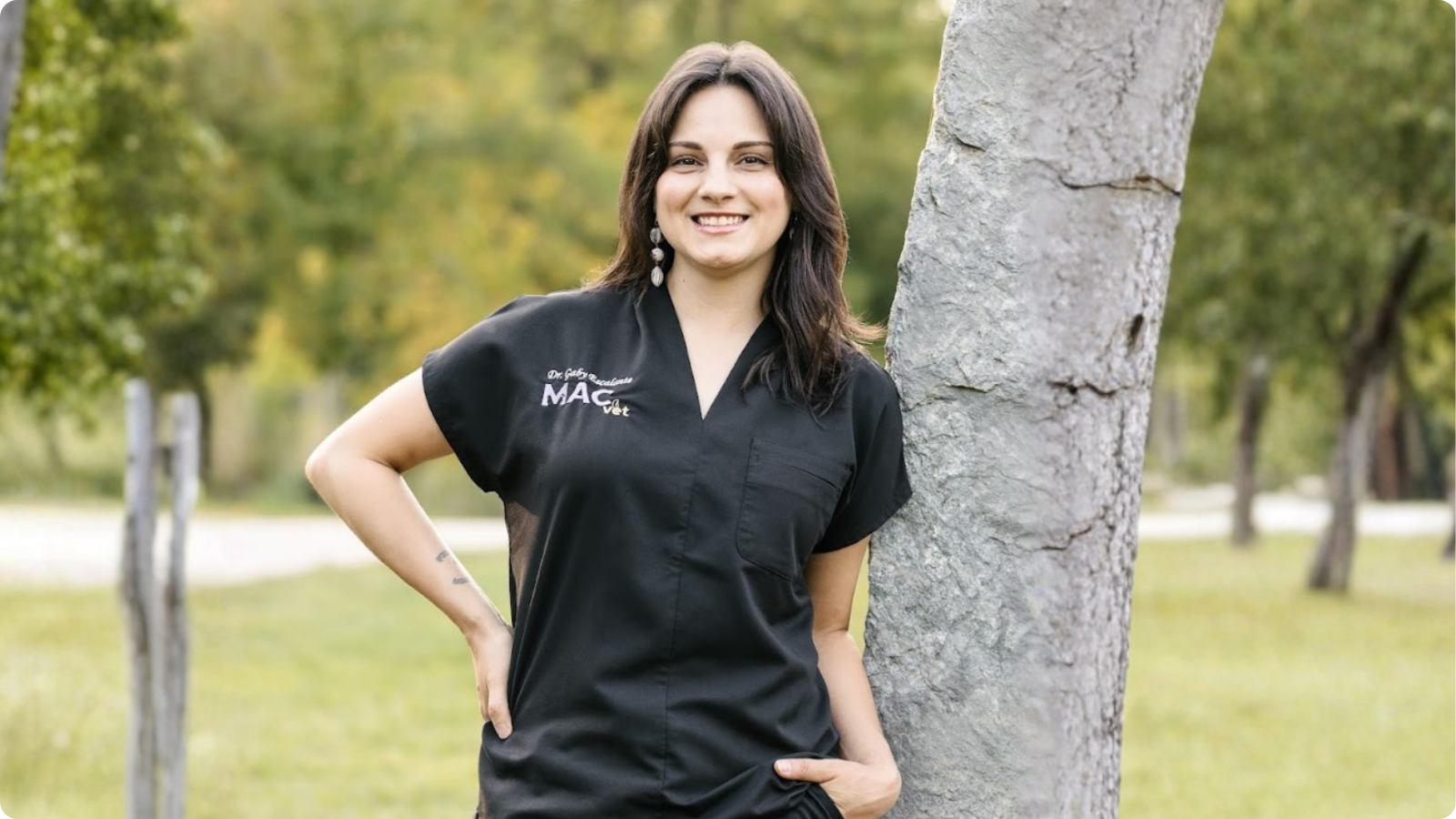
Meet Dr. Gaby Escalante
Dr. Gaby is a board-certified veterinary anesthesiologist with extensive teaching experience in both academic and private practice settings. She's published research in top veterinary journals and now runs MACvet (Midwest Anesthesia Consulting Veterinary Services), where she provides anesthesia consultation and training. MACvet’s goal is to make advanced anesthesia accessible to all animals in all sectors of veterinary medicine.
Her clinical interests include managing difficult airways, multimodal anesthesia, locoregional techniques, and improving anesthetic recoveries. But what really sets her apart? Her genuine love for teaching and her ability to make complex topics accessible and engaging.
(And yes, she's obsessed with birds. All birds. You've been warned.)